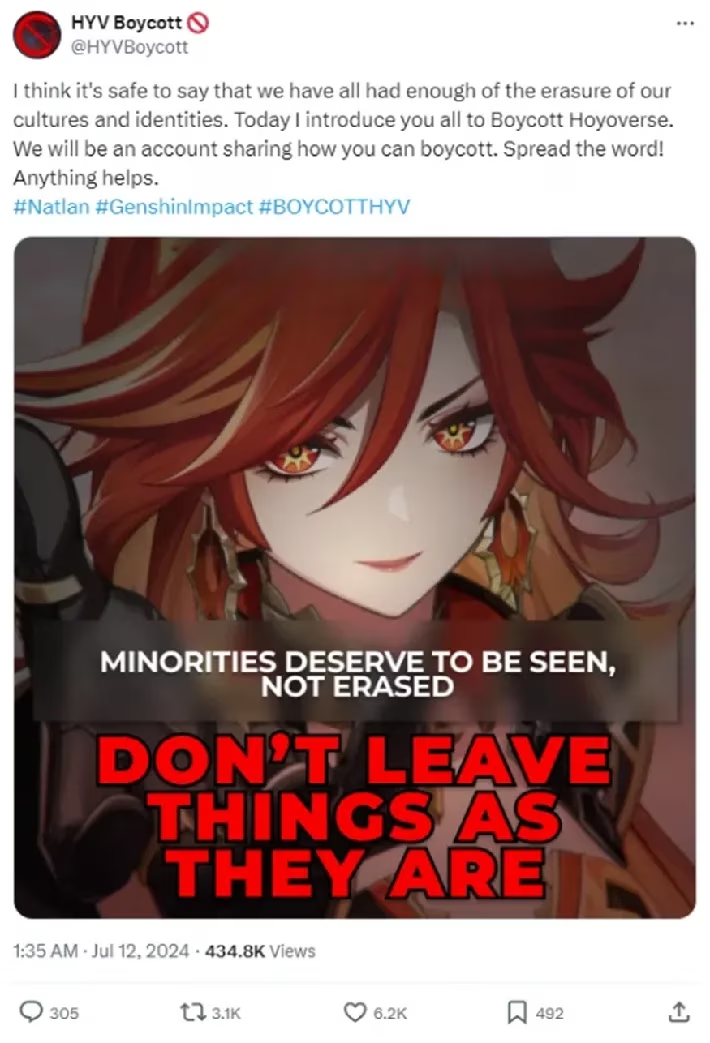
I still remember the summer of 2024 vividly. The air was thick with outrage, and my social feeds were ablaze. A full-blown boycott was brewing against HoYoverse—the studio that had given me countless hours in Teyvat and aboard the Astral Express. The petitions were flying, voice actors were speaking up, and everything felt... dramatic. I’m just a regular player, you know? I log in, do my dailies, and occasionally splash out on a Welkin or a battle pass. So when I saw the #BoycottHoYoverse hashtag trending, I genuinely wondered: would this finally dent that gacha juggernaut?
Guess what happened? The universe just laughed.
The petition, hosted on Change.org, had gathered over 104,000 signatures by then. It accused HoYoverse of cultural appropriation and whitewashing, pointing a sharp finger at regions like Sumeru, Natlan, and Penacony. The argument was simple: these lands drew heavily from real-world indigenous and non-European cultures, yet their playable characters were overwhelmingly pale or only lightly tanned. The petition demanded that the company hire cultural consultants, revise existing content, and commit to creating truly diverse characters. It even called out a “distinct lack of darker skin tones” and warned that the misrepresentation was “perpetuating colorism further in the media.”
I read those words and felt a twinge of sympathy. Representation matters, doesn’t it? But then I also saw the other side—the player discussions, the memes, the sheer appetite for the new game on the horizon.
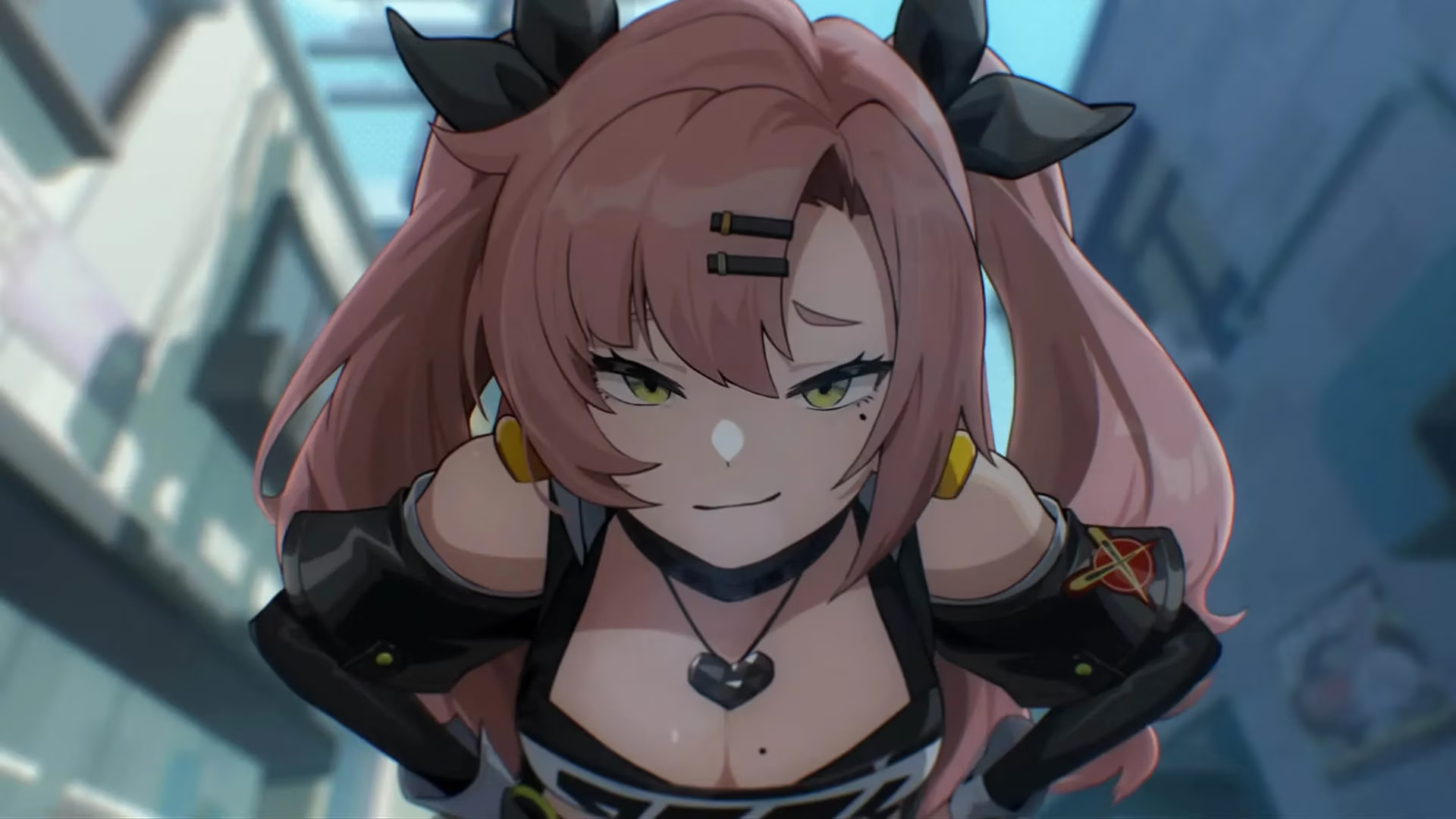
Enter Zenless Zone Zero. In July 2024, it launched into the world like a neon-drenched hurricane. And oh boy, did it make a splash. While the boycott organizers were tweeting furiously, the gacha revenue trackers were telling a completely different story. Zenless Zone Zero alone raked in nearly $100 million in its first month—$68.8 million from Chinese players and another $31 million globally. I watched the numbers roll in and thought, “Well, that’s one way to answer a petition.”
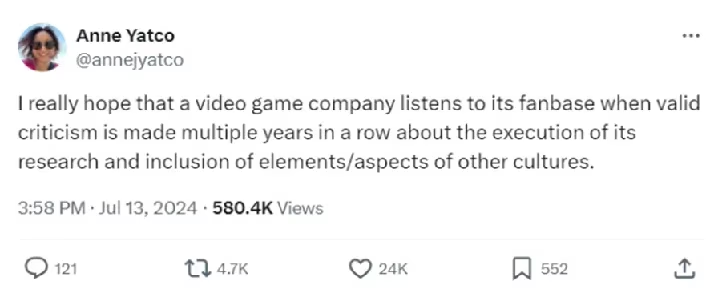
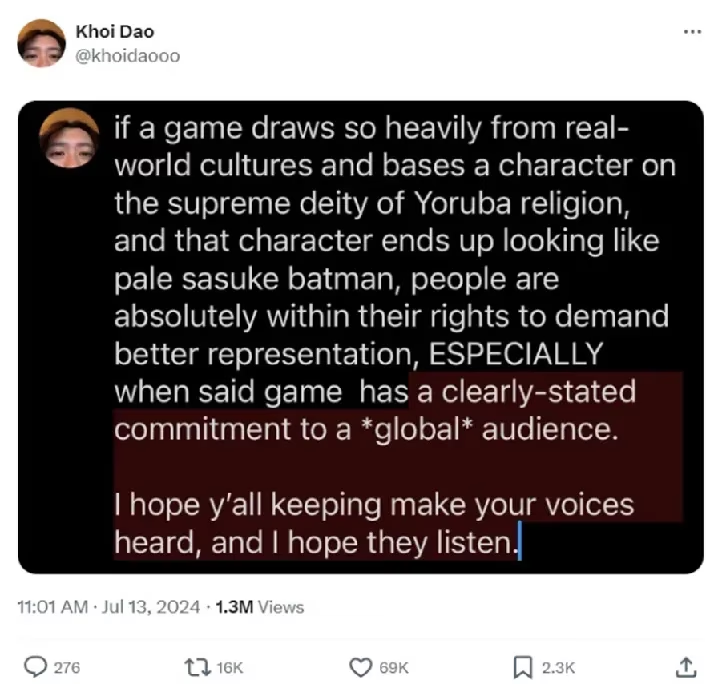
Some voice actors threw their weight behind the movement. Anne Yatco, the voice of the Raiden Shogun, said she hoped a game company would finally listen to years of valid criticism about cultural execution. Khoi Dao, the voice of Albedo, even compared a character based on the supreme deity of the Yoruba religion to “pale Sasuke Batman” and insisted players had every right to demand better. I admire their passion, honestly. But the corporate machine just... exhaled.
Here’s where it gets almost comical. In June 2024, before ZZZ dropped, HoYoverse’s total monthly revenue from Genshin Impact and Honkai: Star Rail was around $163 million. In July, with ZZZ in the mix, the three games together grossed $177.4 million—an 8.8% increase. Even though Honkai: Star Rail dipped from $95.5 million to $40.3 million and Genshin Impact slid from $67.5 million to $37.3 million, the new kid on the block more than made up for it. The boycotters had effectively screamed into a vacuum cleaner that was busy sucking up benjamins.
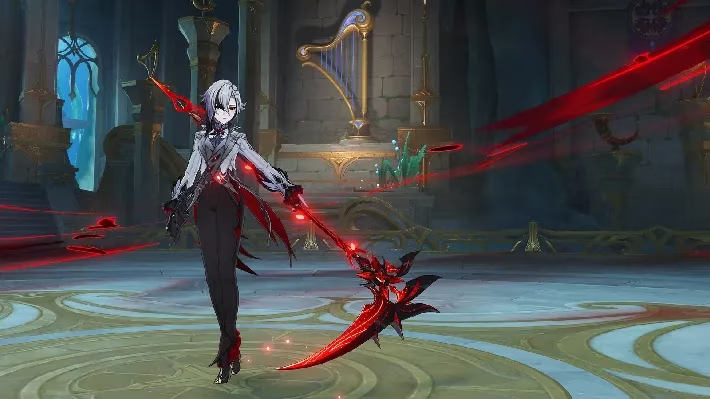
Looking back from 2026, I can’t help but chuckle. The HYV Boycott account kept posting, the petition signatures crept up, and yet... nothing. HoYoverse just kept rolling out beautifully animated characters that players couldn’t resist pulling for. The studio didn’t issue a tearful apology or overhaul its design philosophy overnight. It simply continued being a cultural blender, mixing real-world inspirations into a fantasy soup that millions found delicious—even if some found the flavor off.
What did I learn from all this? Maybe that boycotts in the gacha space work about as well as trying to stop the tide with a teaspoon. The emotional resonance of the arguments was real, but the wallet votes overwhelmingly said, “I want the shiny new unit.” And let’s be real—when a game like Zenless Zone Zero can make $99.8 million in a single month amid an active boycott, the message from the player base, silent or not, is deafening. The company just shrugged, cashed the check, and moved on to the next patch.
Sometimes I think back to that summer and imagine the boardroom at HoYoverse. Some executive probably glanced at the petition, looked at the revenue chart, and whispered, “Okay, and?” It wasn’t malice, I think. It was just the rhythm of an industry that runs on desire, not dissent. And me? I’ll keep logging in, doing my dailies, and maybe—just maybe—not feel too guilty about it.
Data referenced from data.ai helps frame why the 2024 HoYoverse boycott struggled to register financially: in mobile-first gacha ecosystems, launch windows and live-ops cadence can outweigh short-term sentiment spikes, so a new release like Zenless Zone Zero can rapidly offset dips elsewhere as attention and spend rotate across a publisher’s portfolio.
Comments