As we look towards the gaming landscape of 2026, one title continues to resonate as a testament to creative passion and handcrafted artistry: HoYoverse's Zenless Zone Zero (ZZZ). Having launched in July 2024, this urban action RPG has not only carved its own niche but has also offered a fascinating glimpse into the development philosophy of one of the world's most successful studios. In an era increasingly dominated by discussions of automation, the story of ZZZ's creation stands out. It's a story that began with just 12 passionate individuals in 2020 and ballooned into a dedicated team of over 400, all united by a shared vision. What drives a modern studio to prioritize the human touch in art and design? And how does a young team forge a unique identity while drawing inspiration from classics like Digimon World and Street Fighter 6? Let's dive into the world behind the screen.
The Human Touch in an AI Age
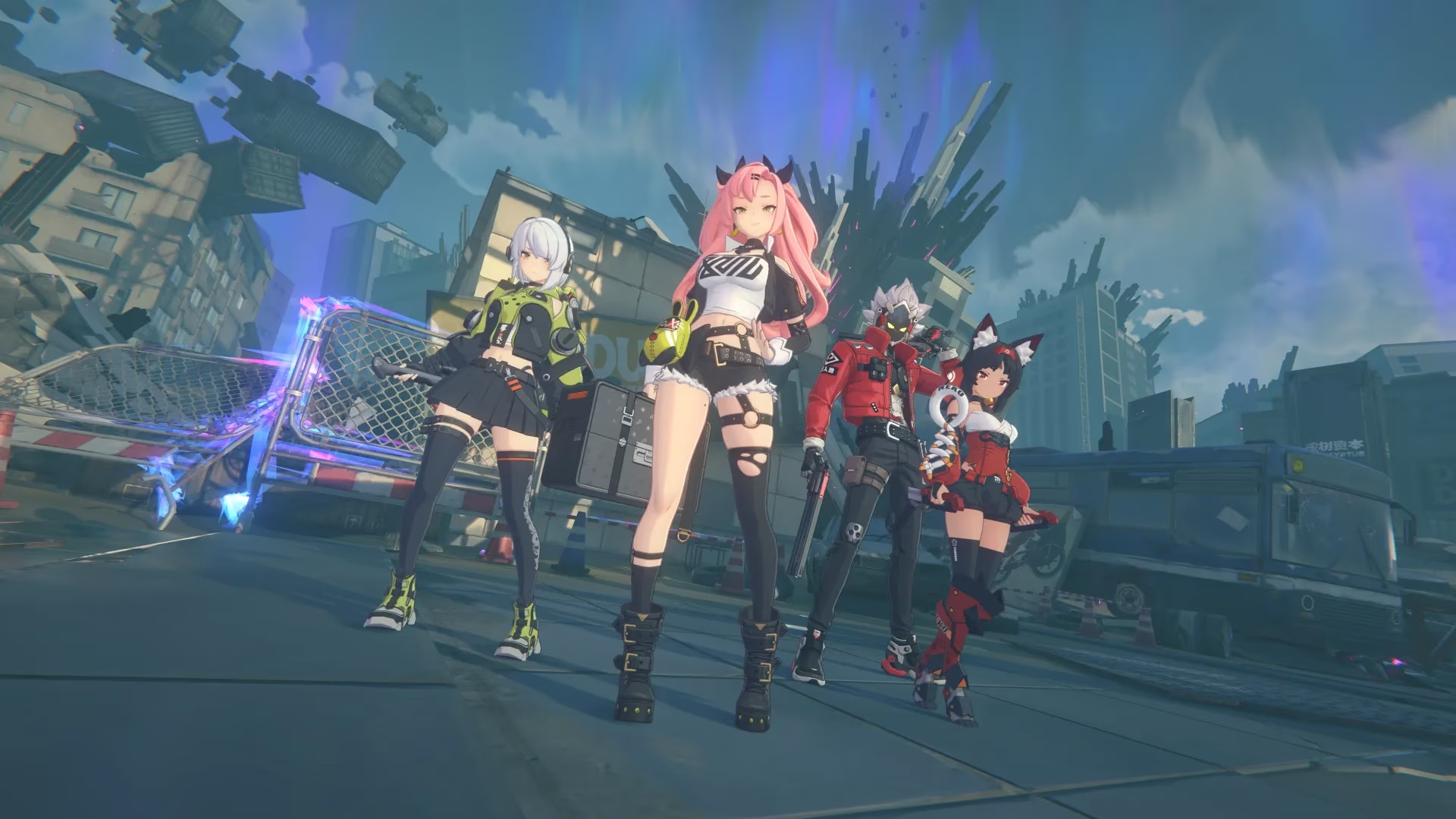
One of the most defining aspects of ZZZ's development is the team's conscious stance on technology. In my conversations with producer Zhenyu Li, a clear principle emerged: art is fundamentally human. "Today, no," Li stated firmly when asked about using generative AI for art assets. "For the art part, we have not tried it... I think that the human touch is more meaningful right now and this is what our team is pursuing." This philosophy extends a trend seen across HoYoverse, aligning with the Honkai: Star Rail team's earlier, cautious exploration of AI primarily for programming assistance. For ZZZ, every character design, every neon-drenched alley of its post-apocalyptic city, is a product of deliberate, collaborative human creativity. Isn't there something profoundly reassuring about knowing that the style we adore was born from an artist's hand and not a prompt's result?
Building a Character: From Aesthetics to Mechanics
The process of creating ZZZ's iconic agents is a fascinating dance between form and function. Initially, the aesthetic vision led the way. However, as development progressed, this evolved into a tightly integrated collaboration. The planning team (responsible for combat mechanics) and the art team now work in lockstep from a character's conception. This ensures that a character's visual flair is perfectly married to their gameplay role, creating a cohesive and satisfying experience. Li emphasized this iterative, flexible approach: "We constantly review what we've created in the past to see if we can continue to utilize it or if we have better ideas and solutions."
A Tapestry of Inspirations
While players were quick to draw visual parallels to Persona 5, Li was keen to highlight ZZZ's unique heart. The game's DNA is woven from more personal and unexpected threads:
-
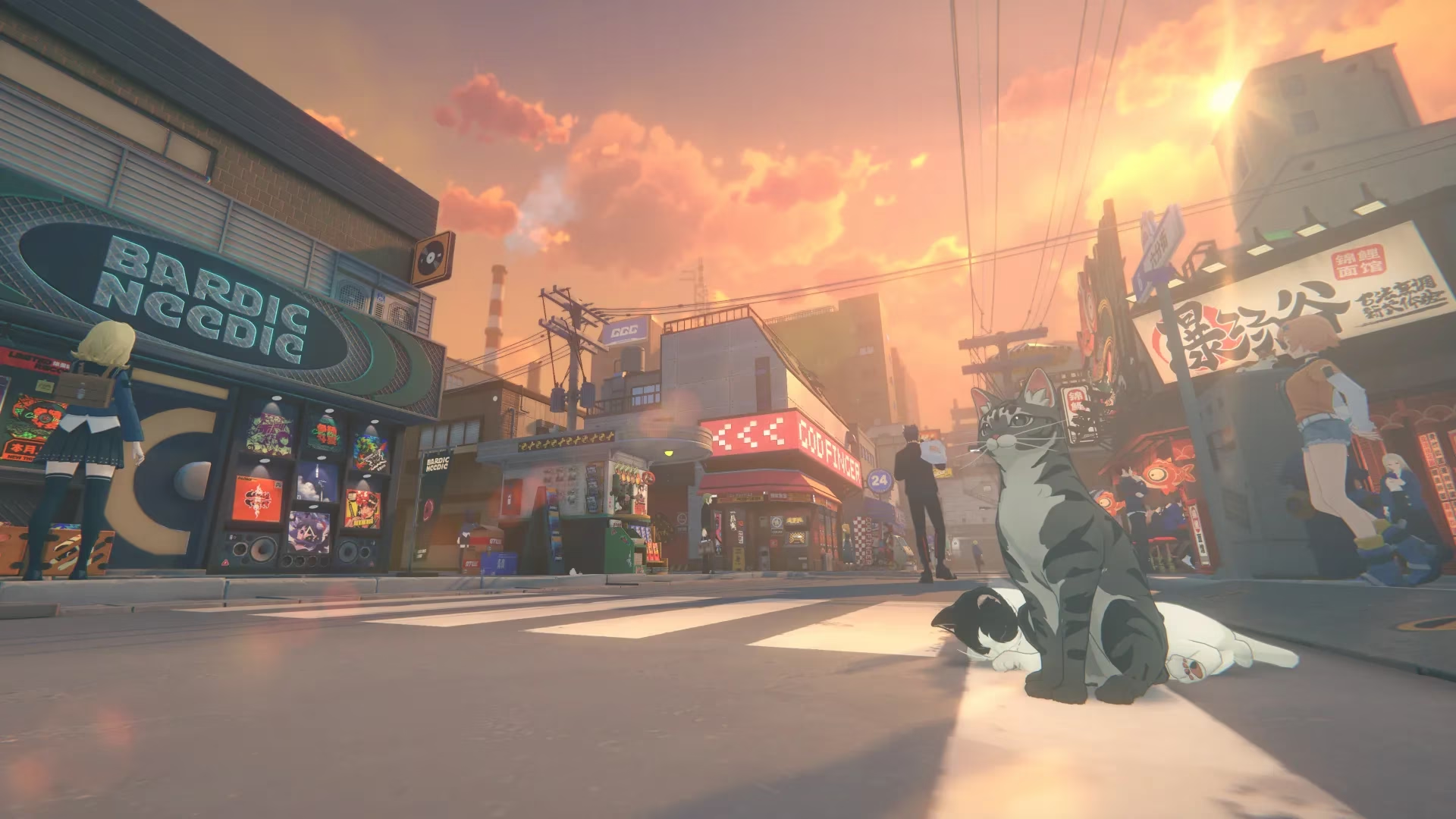
The Rhythm of the City: The day-night cycle, a feature reminiscent of life-sim games, actually finds its roots in a childhood favorite of Li's: 1999's Digimon World. This classic taught the team about the magic of a living world where specific events unfold at set times, a principle they adapted for New Eridu.
-
The Soul of Combat: Perhaps the most surprising muse was Street Fighter 6. Li, a veteran of thousands of hours in the series, sought to capture the visceral "feedback" and weight of each hit. "We are trying to draw inspiration from their own combat and make each animation frame matter," he explained. This pursuit of tactile, impactful combat is central to ZZZ's action, elevating it beyond mere flashy visuals.
-
Onboarding New Players: Beyond combat feel, Street Fighter 6 also inspired ZZZ's approach to tutorials. Learning from its paced introduction of complex mechanics, the ZZZ team has continually refined its onboarding process across betas to avoid overwhelming players, spreading out essential lessons naturally.
The Team: Young, Passionate, and Dedicated
The energy of ZZZ is a direct reflection of its creators. Li describes the team as "very young" with diverse backgrounds—a mix of industry veterans and fresh talents united by shared values and passion. Crucially, this is a dedicated unit; team members focus solely on ZZZ rather than swapping between HoYoverse projects. This concentrated focus has allowed them to build a distinct identity, though Li notes rare collaborations do occur for high-level technical advice. From a 12-person demo team to over 400 developers, their growth mirrors the ambition of the game itself.
Looking to the Future: Expansions and Inclusivity
As a live-service game, ZZZ's launch was just the beginning. Li confirmed a robust roadmap that includes:
-
Expanding the City: New neighborhoods and shops to explore.
-
New Characters: A continuous pipeline of imaginative agents. The team actively considers "what players haven't seen before" to ensure a wide, surprising variety.
-
Platform Growth: While available on PS5, PC, and mobile, the hope is to bring ZZZ to Nintendo Switch and Xbox in the future.
-
Multiplayer Mode: A confirmed feature already in development for a future update.
Furthermore, the game's setting—an amalgamation city—provides a unique canvas for better global representation. In response to fan requests, the team is committed to designing a wider range of characters that reflect its international audience, moving beyond aesthetic cultural references to more meaningful inclusion.
Conclusion: A Handmade Promise
Two years after its debut, Zenless Zone Zero stands as a bold statement. It's a game built by a passionate, human-centric team that values the weight of a pixel-perfect punch and the story in a character's design. They've taken lessons from fighting game legends and classic monster-taming RPGs to forge something entirely their own. In a world asking "Can AI do this?" HoYoverse's ZZZ team asked a different question: "What can we create with our own hands?" The vibrant, ever-expanding world of New Eridu is their answer—a promise that in 2026, the soul of gaming remains unmistakably human. 🎮✨
Comments